On Cynicism and Hope
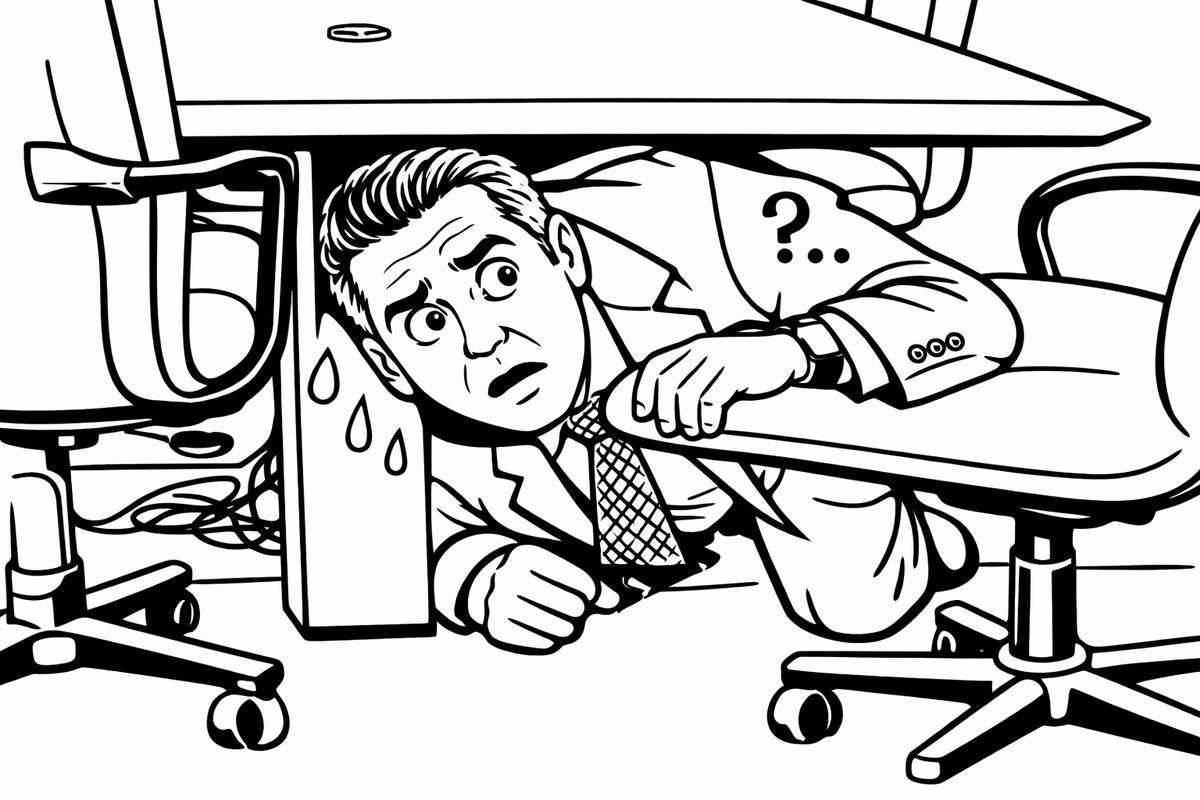
The most common question I received after launching this blog has been some variant of “why did you call it Hopeful Skeptic”?
It took me three months to answer this question, in part due to professional and personal contexts that required prioritization, but more so because of the need for both introspection (what do I mean by this?) and situational awareness (what is going on??).
For those who asked, and those who didn't, this post explains what hopeful skepticism means, why I think it’s an essential disposition, and how I hope to practice it.
Hope for Cynics
The term is borrowed from Stanford psychology professor and author Jamil Zaki in his excellent book, Hope for Cynics (if you read no further, please take the recommendation to read Zaki’s book, or his summarizing article here).
Zaki uses the term hopeful skeptic to describe his findings on the ideal psychological and psychosocial stance for people navigating the many challenges of life today.
At its core, hopeful skepticism is defined in opposition to what it is not: cynicism. A cynic disbelieves or mistrusts what they see, believing people are selfish, greedy and dishonest, and that institutions and organizational behavior reflect this.
A hopeful skeptic is someone who trusts but verifies, using evidence to decide who and what to believe in, and believing that cooperation and mutual benefit are likely paths to individual and collective success.
Cynics use their negative beliefs to justify their own self-serving or harmful behavior. Hopeful skeptics acknowledge flaws in humanity, organizations, and information systems, but continue to act in altruistic ways that lead them to better outcomes than they would otherwise achieve.
Cynicism, and related states like mistrust and despair, are correlated with lower physical and mental health, shorter life spans, lower incomes, worse relationships, greater polarization, and poorer economies. Conversely, people who hold mindsets associated with hopeful skepticism are likely to have better health, incomes, and critically, trust in others, which leads to society–wide improvements for all.
So what?
I worry that it has never been easier to fall into cynicism, and its allies, nihilism and despair. I experience this in myself, I find it in friends and colleagues, and I see it across swathes of society. In many ways, I think it is as big a problem as the most daunting and gnarly challenges that we face as a society. Allow me to explain.
Cynicism - mistrust of other people and institutions - is a natural reaction to the tumultuous environment we live in today. As of early 2026, the news cycle is as gloomy as any I can remember, and in that light, we can all be forgiven for edging towards cynicism and mistrust. There is psychological safety in disengaging from the news, comfort in reading opinions that align with our own, righteousness in assuming the worst and being proven right.
And this bears out in the data - trust in government, news media and other people are close to or at record lows.
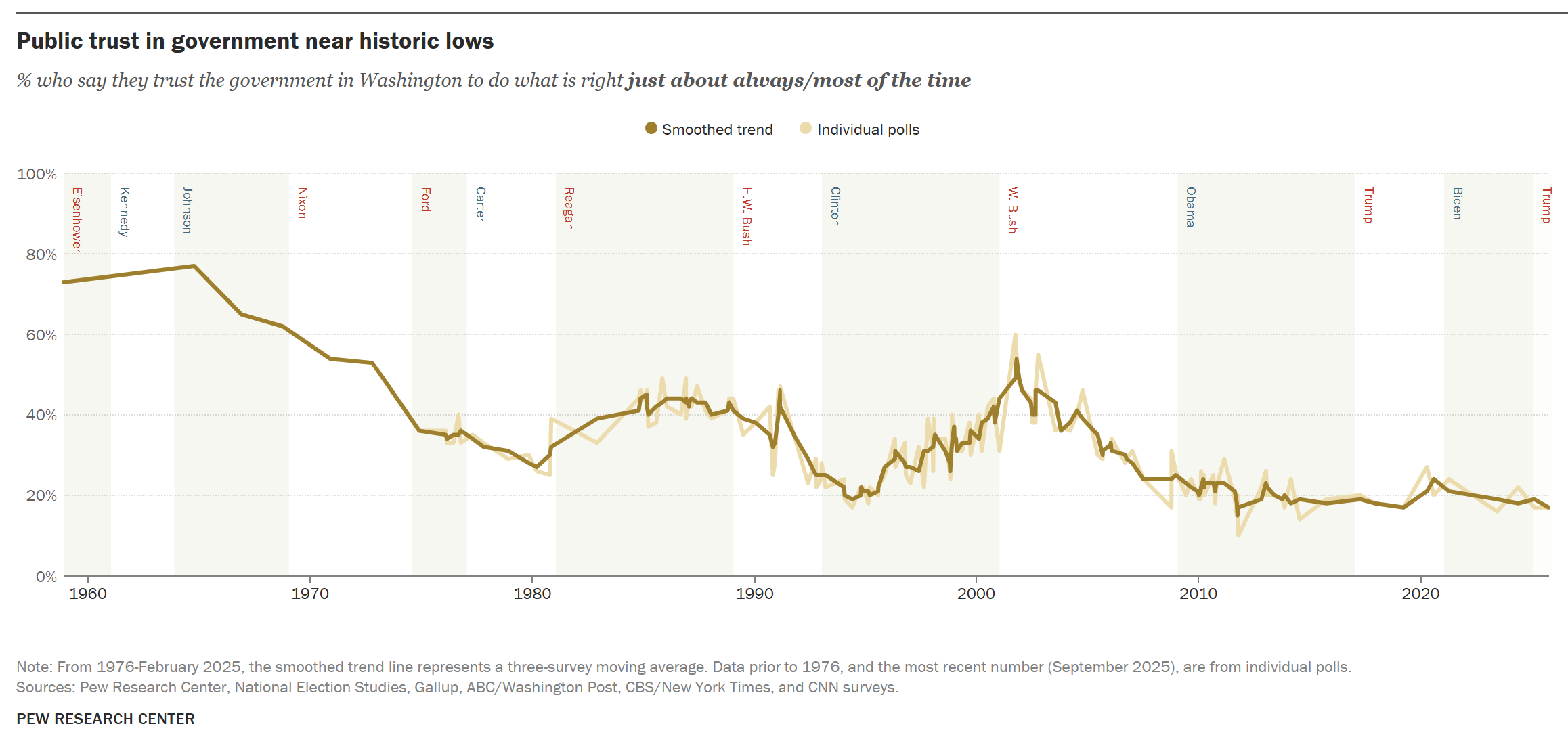
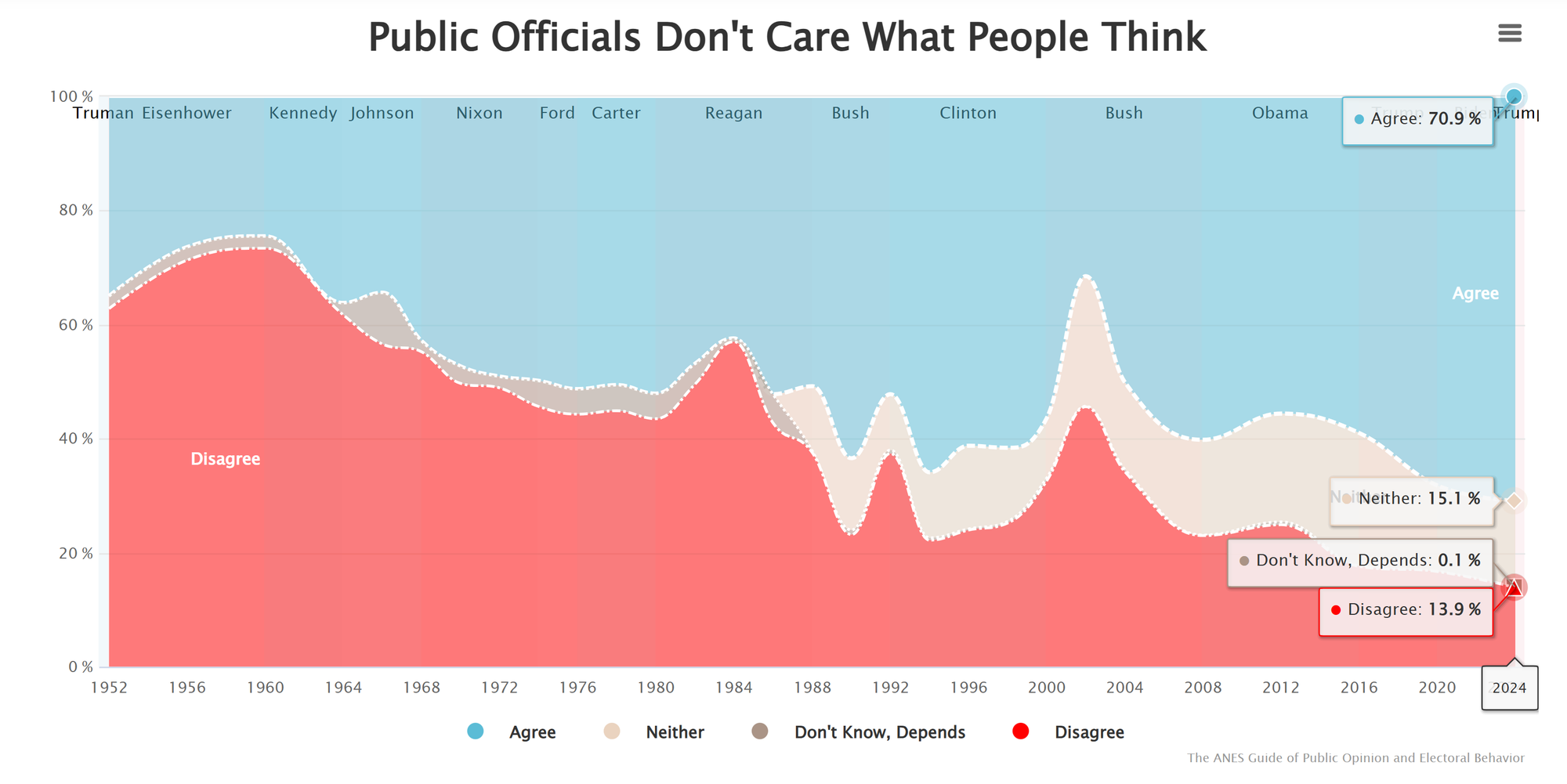
People no longer believe politicians care what they think.
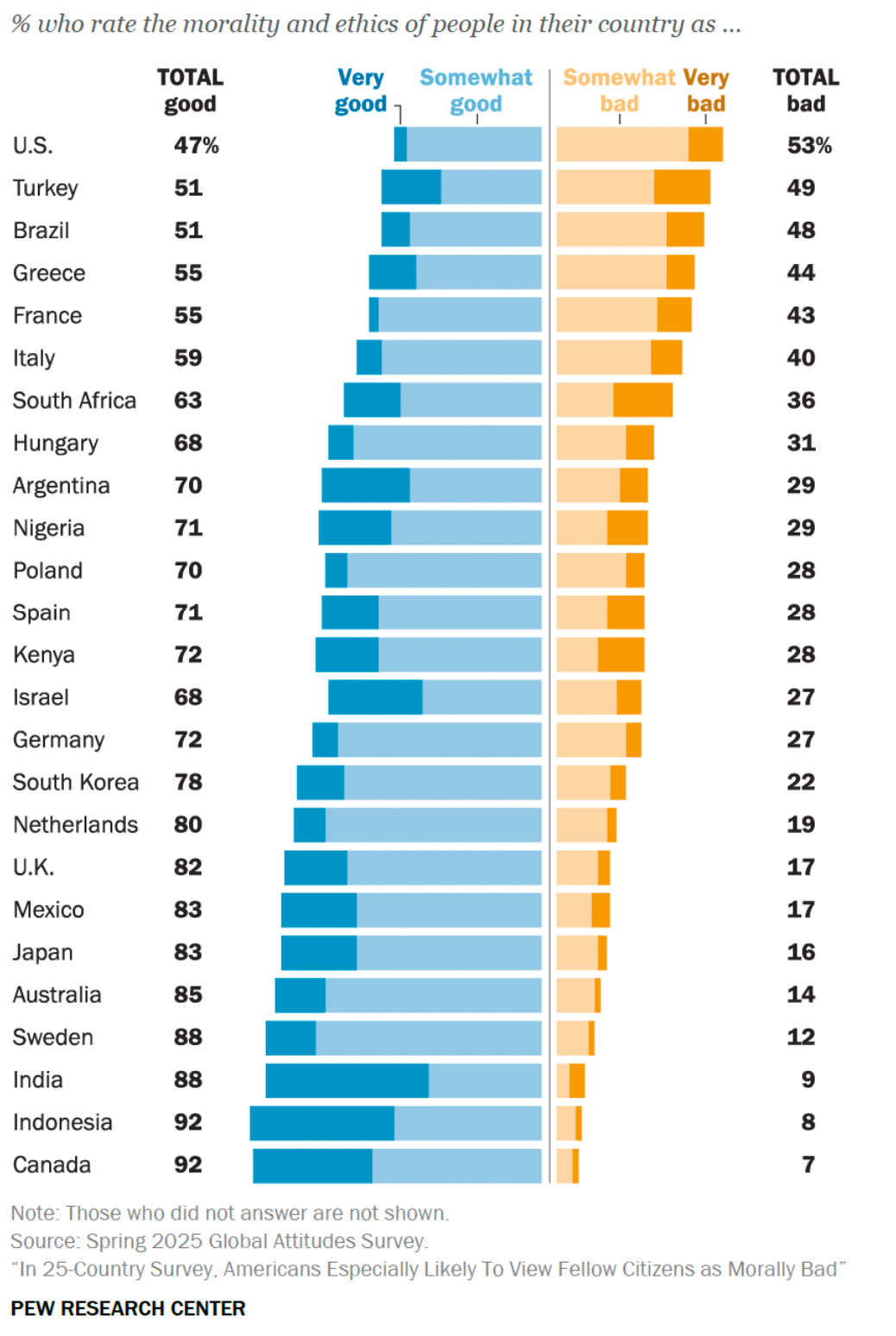
And a recent Pew survey found that cynicism cuts so deep in the US that a majority of Americans now think their fellow Americans are not just untrustworthy, but morally bad.
This mistrust breeds cynicism, leading us to disengage with the world around us, and to make decisions based on our own narrow self-interest.
Data show that this cycle is counterproductive, mentally, physically, and materially. And, I would argue more importantly, it degrades our agency, and as a result, our ability to create the future that we want for ourselves, our families and our communities.
A great example of this can be seen in the political realm, and specifically, in the primary system used in most U.S. states
The Problem of Primaries: Why Cynicism Increases Polarization and Degrades Political Representation
Politics in the US (and in many other liberal democracies) has become increasingly partisan and polarized in recent years. As Anthony Fowler and Shu Fu write in a forthcoming paper, “Members of the U.S. Congress do not closely represent the preferences of their constituents, with Republicans positioned consistently to the right and Democrats to the left of the median voter in their respective constituencies.”
Primaries, they find, are a key (though not the only) driver of this trend, because a) they advance candidates who cater to more extreme viewpoints, and b) they introduce the risk of being “primaried” to existing candidates (i.e. being replaced by a more extreme candidate in a forthcoming primary). Through this mechanism they observe both rightward and leftward shifts of candidates in more contested seats.
I think this is a good example of cynicism and resulting disengagement at play.
Diminishing trust towards institutions, media, and each other, is associated with disengagement from the political process. Nowhere is this felt more keenly than in U.S. primaries, where average turnout was 21% from 2014-2020, vs 53% in general elections over the same time.
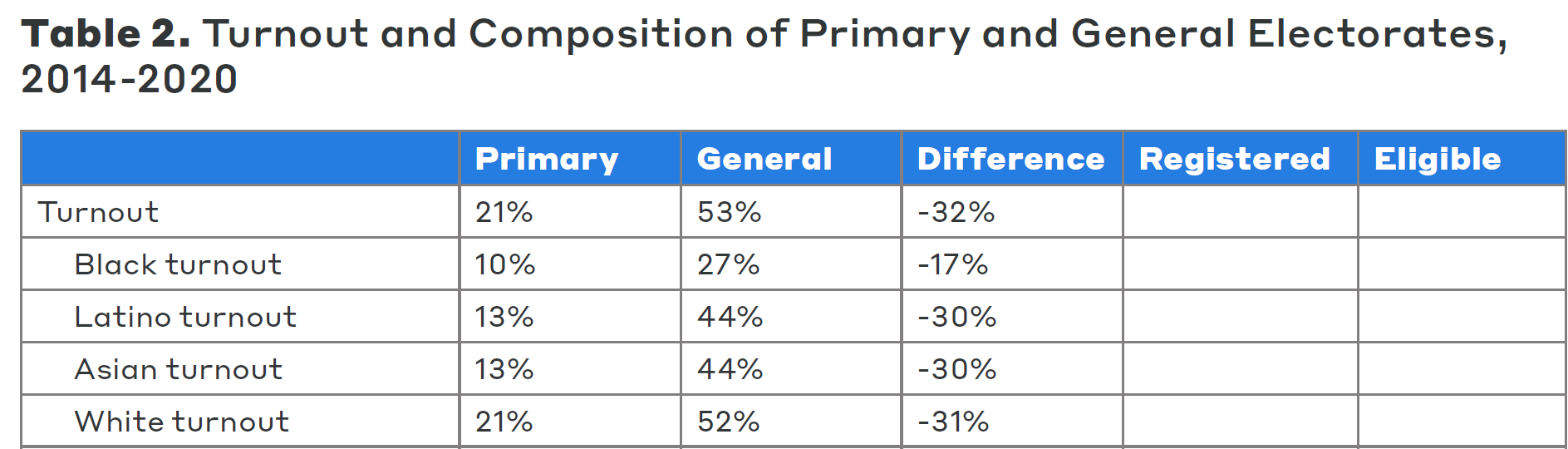
Such low participation in primaries allows more fringe voters (and the organizations behind them) to have an outsized influence, both on candidate selection and policy preferences more generally.
And while it's not fair to say that cynicism is the sole or even primary driver of low participation in primaries (structural issues and voter disenfranchisement play major roles too), I think it is nonetheless a strong argument to say that, as people use the craven nature of politicians and politics as a pretext to disengage both from primaries and the broader electoral process, those on the fringes, who remain engaged gain outsized influence, creating a downward spiral of vitriolic and extreme discourse, leading to greater cynicism, which leads to further disengagement, which results in ever more extreme policies.
As we face up to some of the wickedest problems humanity has ever encountered, allowing people on the extremes to take over public discourse through our cynicism and disengagement is having a compounding harmful effect on our ability to handle the very problems we are addressing.
What now?
There are many valid and legitimate reasons to be mistrustful, disengaged, and even cynical right now. Politicians often seem intent on proving our inner cynics correct at every opportunity. And, we must acknowledge that cynicism is a known byproduct of burnout, anxiety, and depression, which many people people, especially in the social and public sectors, are experiencing right now.
But these outside factors, if we allow them to, will only lead in one direction, towards hopelessness and despair. And while this cynicism and disengagement can feel like self-preservation, the literature shows that, in the long run, we are doing more harm than good by adopting these mindsets.
It is fair to ask, at this point, what we might do about all of this. I am still working out what I can do personally, let alone what we should do collectively. But in the spirit of being concrete in my hopeful skepticism, here are a few of the principles I am working to implement:
1. Improving my information intake
I have found that reading one source of news, or even many sources of a single political persuasion, leads me to feel worse about the state of the world, versus when I read a variety of sources of different political persuasions. In the latter, I can see issues with greater clarity and avoid black or white ways of thinking.
So, rather than switching off from the news, I am increasingly trying to “braid” my news and opinion from sources across the political spectrum, including from a variety of newspapers, blogs, substacks, podcasts and importantly, the underlying research papers that inform many of these outlets.
There are times when I am overwhelmed by this approach, whether due to the sheer volume of information, or the singularly bad nature of a given piece of news. But for the most part, I am finding this approach, with heavy curation, is helping me to stay more engaged and more positive than I was before I started.
2. Participating better
I know people who are deeply engaged in politics, at local and national levels, including organizing, campaigning, fundraising, etc. I admire these people greatly. And, I have realized that I am not personally wired to do this, so, I need to find my own ways to participate better politically in a way that keep me engaged, positive, and hopeful.
A few things I’m trying here include writing to my representatives on a regular basis, donating better, i.e. to grass roots, voter mobilization campaigns (vs directly to political campaigns which tend to be a less effective use of resources), and of course, voting in primaries (full list of state primaries here, mark your calendars).
Of course, there are many other things I can be doing here, but this is what I feel I have capacity for right now.
3. Going positive, going first
Peter Kauffman, the CEO of aviation company Glenair said something in a speech that has stuck with me.
“All you have to do, if you want everything in life from everybody else, is first pay attention; listen to them; show them respect; give them meaning, satisfaction, and fulfillment. Convey to them that they matter to you. And show you love them.”
Many people have their own version of this, from mindfulness, to radical empathy. But Kauffman’s perspective is particularly resonant for me - it is about how we treat others, how we show up in every moment for them. And while being hopeful has a lot to do with the news and the economy and politics, Professor Zaki’s research shows that it has even more to do with how we interact in daily life.
My last principle then, is to adopt and maintain a positive affect, especially as it relates to other people - bringing skepticism where appropriate, but starting with a trusting, positive, altruistic mindset. Or as Kauffman put it, “going positive, and going first.”
Before closing, it is important to acknowledge the degree of privilege necessary to actualize some of these principles. I have the time to read and money to spend on news subscriptions. I have the right to vote, and the ability to choose where I live such that my vote might matter. But I also believe strongly that the third principle, the positive affect we adopt, and the intentions we hold around this, are more important than anything requiring resources to address.
In the spirit of brevity I will leave my anti-cynicism crusade on that note. I am curious to hear what others have tried, successfully or otherwise. And, I look forward to sharing more thoughts on how we might address hopelessness at a societal level in the future.
For now, to the four of you who asked what a hopeful skeptic is, you have your answer.